





The online webinar focused on OER awareness. However, in the presentations, the webinar addressed the OER domains by raising awareness of OER opportunities and barriers; strengthening educators’ skills in finding, adapting, creating, licensing and quality-assuring resources; promoting educator agency and sharing; highlighting policy, infrastructure and access requirements; and encouraging collaboration, repository use, mentorship and network-building across teacher education institutions in South Africa.
The webinar was necessary because many teacher educators at UNISA and beyond had limited awareness, knowledge and practical experience of OER, while institutional policies, infrastructure and support remained uneven. It addressed the need to expand access to quality, affordable and contextually relevant resources and to strengthen educators’ capacity to find, adapt, create, license and share OER responsibly.
The webinar presentations introduced OER as openly licensed resources that can improve access, quality and contextual relevance in teacher education. One presentation explained how OER support the revised MRTEQ, curriculum transformation, multilingual education and equitable access. Another shared approaches to finding, adapting and creating OER, emphasising mentorship and reflective e-portfolios. A quality-assurance framework addressed curriculum alignment, academic accuracy, pedagogy, accessibility, copyright and technical usability. Creative Commons licences, attribution and responsible sharing were also explained, with demonstrations of how to locate and publish openly licensed resources. The 139 participants who attended were encouraged to use institutional and regional repositories to support dissemination and collaborative practice.
Furthermore, the presentations highlighted limited OER awareness among teacher educators, inadequate institutional OER policies, uneven digital skills, and constraints in infrastructure and connectivity. The discourse also noted difficulties in finding and adapting suitable resources, ensuring accessibility and quality, applying copyright and Creative Commons licences correctly, and establishing adequate institutional support and monitoring mechanisms.
ADVICE FOR TEACHER EDUCATORS
- Start small: Select one existing OER from a reputable repository and adapt it to your learners’ curriculum, language, culture and access needs.
- Check before using: Verify the Creative Commons licence, accuracy, relevance, accessibility and quality of the resource, and acknowledge the original creator.
- Share and collaborate: Test the adapted resource with learners, gather feedback, improve it, and share it with colleagues or through an institutional or regional repository.
IMPACT BEYOND THE ACTIVITY
Beyond raising awareness, the webinar assisted participants in strengthening educators’ capacity to find, adapt, create, quality-assure, and share OER in their own teaching contexts. It has the potential to encourage greater use of institutional and regional repositories, collaboration across institutions, improved policy support and multilingual resource development.
KEY TAKEAWAYS
- Greater OER awareness enables teacher educators to recognise their potential to improve access, quality and contextual relevance.
- Awareness of licensing, quality assurance and accessibility supports the responsible use, adaptation, creation and sharing of OER.
- Institutional awareness strengthens collaboration, policy support and commitment to developing a sustainable OER culture.
You might also like


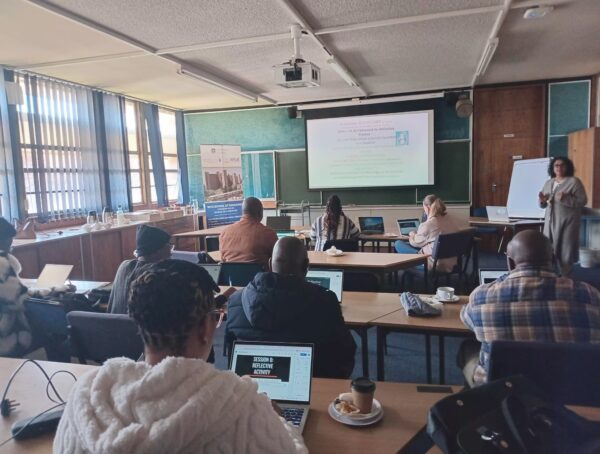
More from Southern Africa
Introductory Workshop for OER Champions at Walter Sisulu University
Walter Sisulu University (WSU) conducted a 2-day workshop on introducing WSU champions from different campuses to …
National Workshop on Open Learning for Schools of Education
The three-day workshop held from 24-26 March included expert presentations on open learning, institutional readiness, open …